Cheesemaking in Stellenbosch with Leon (The Milkman) and Elaine van der Westhuizen
I've been wanting to make cheese for a while, and recently the algorithm has been prompting me to take this interest further by bombarding me with cheesemaking videos on YouTube. In particular, videos from Jennifer Murch (aka the Milkslinger). She pretends to make it look easy, but she has her own style and methods that have clearly been honed over many hundreds, or thousands, of litres of milk.
After watching a few videos, I decided I needed to try. The first thing I would need is "rennet", an enzyme I vaguely remembered from Mrs Lettie Rivett's biology classes in the 90s. It's responsible for turning liquid milk into solid cheese. I did a Google and came across an online shop selling it. Browsing the shop, I quickly realised that watching a few YouTube videos was not going to crack it. I was going to need professional help. As fate would have it, there was an advert on the site for a two-day cheesemaking course. I was in the right mood for such, so I contacted Elaine, checked my leave calendar, and booked a slot.
The Course
The course ran over two days and was held in one of the classrooms at the Stellenbosch University Department of Food Science. This is also where Leon studied his B.Sc in Food Science, majoring in Chemistry, so you get just enough of the "sciencey" stuff around cheesemaking. It turns out that these things are actually pretty important in the balancing game of acidity, temperature, bacteria, and enzymes.
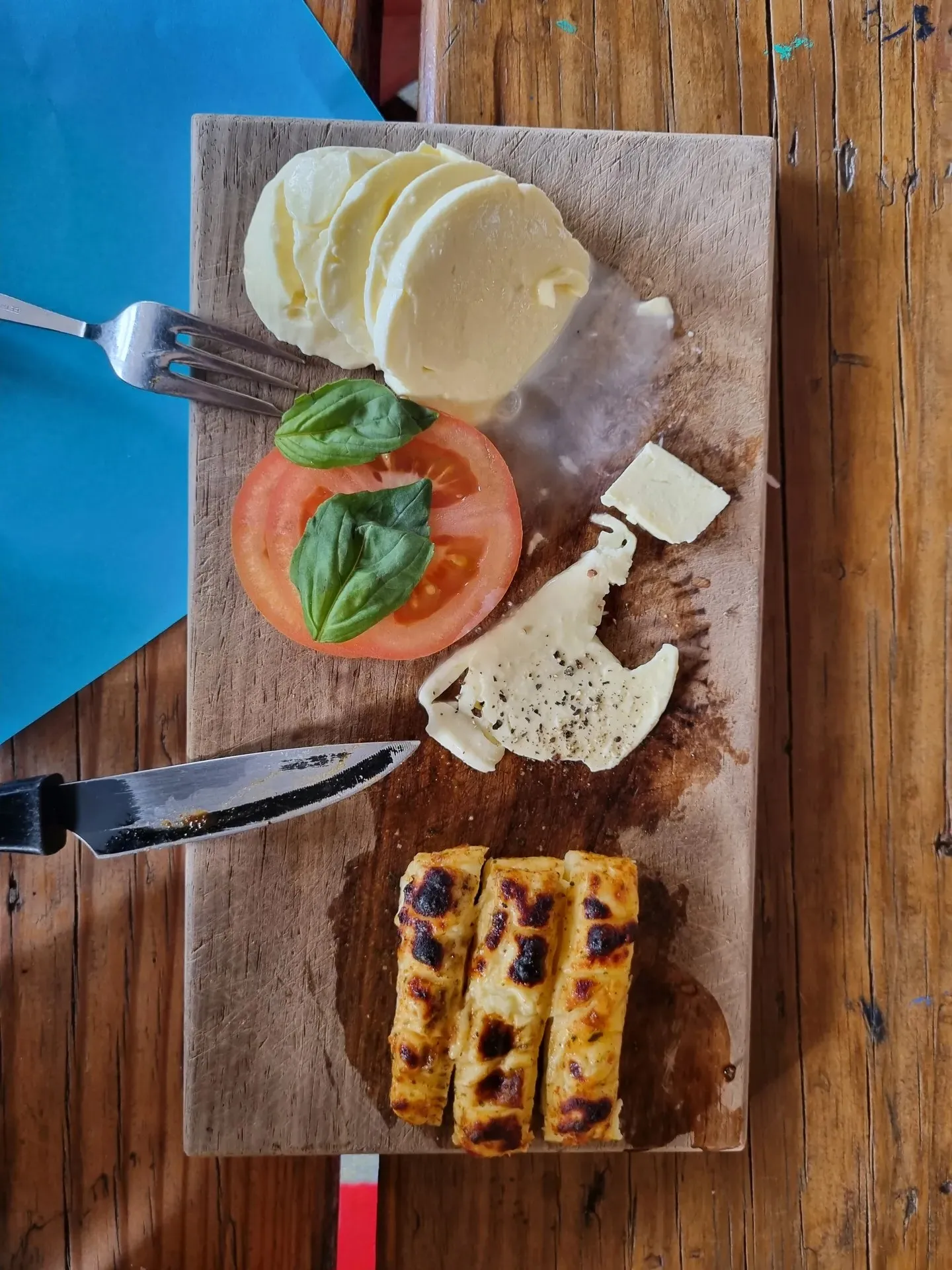
They pack a lot in over the two days. We made Cheddar, Gouda, Feta, Mozzarella, Halloumi, and Ricotta. These cheeses form the base methods of most other cheeses, with a few changes in principles and additions which they talk about and teach. So it's a very well-rounded introduction.
The days start at 09h00 and involve hands-on cheesemaking where everyone gets to see and feel each stage of production. During the bits where you're waiting for the milk to culture, or heat, or cool, or set, you work through the workbook and Leon goes into some of the science behind the various methods. They serve a delicious lunch, included in the course, and you finish at around 15h00. On the last day, Elaine presents everyone with a certificate and you can opt for a "starter kit" that includes everything you need to make your first cheese.


Back at Home
I hit the kitchen armed with my newly gained knowledge (power). I found some whole raw milk from Mysthill Dairy at Wildsprout in Kenilworth. Pasteurised it myself (because bad germs can live in raw milk), hit it with my bacteria cultures and rennet, cut it up, cooked it, and smashed it into some moulds.
Interesting segue: "mould" and "mold" are different spellings of the same thing. "Mould" is, of course, the correct one. It refers to either fungal growth or the form/container that you use to shape the cheese. So it is technically possible to get a mouldy mould.


I really bumbled my way through this process, but I forgave myself considering it was a first attempt. I disregarded my training and went all maverick with the drying process, drying the cheese in the pantry, which inevitably resulted in some mould growing on my new baby cheeses. Apparently this is totally normal, but I cleaned them up, vacuum-packed them, and stuck them in the fridge where they will hopefully behave. Now we wait. I plan on cutting into them in late August or September.


Would I Recommend It?
There were 10 people in the class and it was very informal, with plenty of time to ask questions and discuss some of the more confusing aspects. If you're interested in making cheese, I would highly recommend that you join them. It was a really nice way to spend two days. As well as being fun, you leave with enough knowledge to even start making cheese to sell, should you so wish.

What's Next
I've already added to my cheesemaking arsenal. I bought another mould from Beer Lab (another place to get supplies, although Elaine sells everything you need on her shop and will source something for you if she doesn't have it in stock) as well as a nifty thermometer that clips onto the side of the pot.
I'm going to need a bigger pot at some stage. I can currently handle 4 litres of milk, which gives a manageable cheese of around 750g. But of course I need to make a giant wheel at some stage. I want a cheese as big as my head!